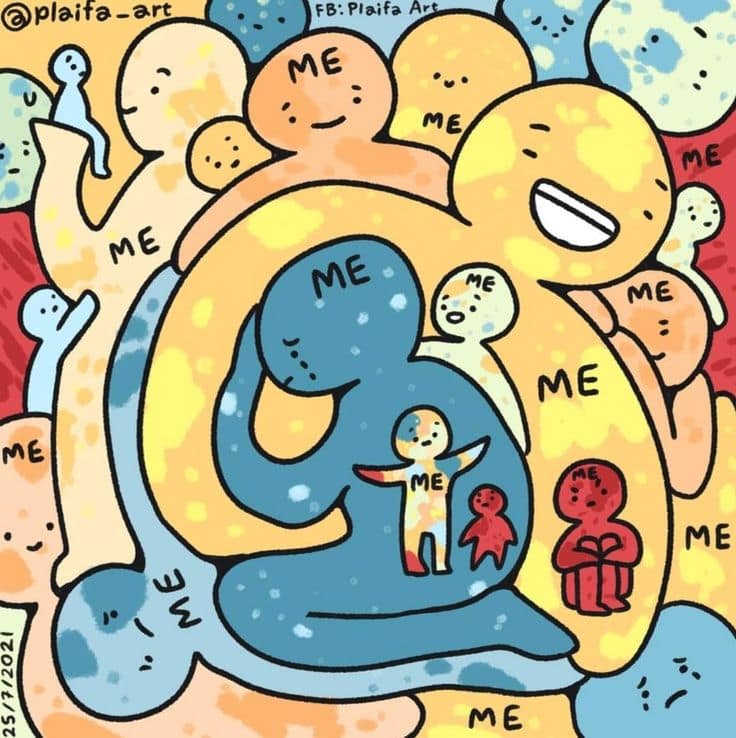
About setting boundaries, losing yourself in relationships, and what really lies beneath people-pleasing behavior.
Many people who struggle to say no do not immediately recognize themselves as people pleasers. You may see yourself as helpful, loyal, caring. Someone who genuinely wants to be there for others. And these are qualities our society tends to value; at work, in friendships, in relationships.
Yet at some point, something begins to feel empty inside.
Being considerate of others seems kind, until you realize that somewhere along the way, you lost touch with yourself. You notice that you say yes when you actually mean no. You take other people’s needs into account, but rarely your own. You avoid difficult conversations. You adapt. And gradually, frustration starts to build.
Perhaps you recognize the feeling of giving a lot while receiving very little in return. The feeling of not being fully seen. A curious question might be: does the other person actually know who you are? Or do they mostly know the version of you that has learned to adapt, perhaps the version that has been adapting for most of your life.
People Pleasing Is Not About Giving. It’s About Staying Connected
From the outside, people pleasing can look kind. You help. You support. You anticipate the needs of others. You prevent conflict and try to keep things running smoothly.
These qualities are not the problem.
The problem begins when your attention to others becomes so great that your connection to yourself slowly fades into the background. Many people pleasers are highly attuned to what is happening around them. They notice tension quickly. They sense moods. They often know exactly what someone else needs.
The challenge is that it becomes increasingly difficult to feel what is happening inside themselves.
What am I feeling? What do I need?
Many people pleasers learned somewhere along the way that maintaining connection was more important than expressing themselves. That adapting felt safer than confronting. That taking care of others brought more security than staying loyal to their own feelings.
Because at one point, it worked. It helped preserve love, attention, peace, or safety.
Only later does the cost become visible. Conflict starts to feel threatening. Setting boundaries feels uncomfortable. Rejection cuts deeply. And little by little, you lose touch with what you truly feel, need, and desire.
Why This Behavior Was Once Intelligent
No child is born a people pleaser. It develops because it once served a purpose.
As a child, you depend on the people around you. You need connection. Love. Safety. When you grow up in an environment marked by tension, emotional distance, unpredictability, or high expectations, you quickly learn what is required to maintain connection.
You read the room. You adapt. You learn what is safe to say and what is better left unsaid. For a child, this is intelligent behavior.
Yet somewhere along the way, an unconscious belief begins to form:
The relationship is more important than I am.
That belief often follows you into adulthood. Not consciously, but in ways that can be felt throughout almost everything you do.
The Hidden Cost of People Pleasing
Every time you adapt yourself while feeling something different inside, you move a little further away from yourself.
You tell yourself it is not a problem. That you understand. That you are fine with it. Meanwhile, tension begins to build. Frustration. Exhaustion.
The body often knows what is happening long before the mind catches up. Many people pleasers recognize symptoms such as overthinking, difficulty making decisions, fatigue, physical tension, back pain, teeth grinding, poor sleep, or the feeling of always being switched on. Always alert.
Not being yourself requires a tremendous amount of energy.
A people pleaser does not lose themselves within a relationship. At some point, they had to lose themselves in order to preserve the relationship. That is an important distinction.
Setting Boundaries Feels Bigger Than It Is
Many people believe that setting boundaries is simply a communication skill. Often it goes much deeper than that.
What happens when you say no for the first time? Someone may feel disappointed. A disagreement may follow. Perhaps you fear being rejected or abandoned.
For someone who has spent years adapting, this can feel risky. Not because it is truly dangerous, but because the nervous system experiences it that way. It responds to familiar experiences from the past. Experiences in which maintaining connection felt more important than being honest.
Which is why setting boundaries often touches something much older: What happens if I truly show myself?
When Self-Love Becomes Another Disguise
Once you begin to see how much you have adapted yourself, a period of anger often follows. You start noticing how much you have given. How often you put yourself second. This awareness is valuable.
Yet another trap can appear here. After years of pleasing others, some people swing to the opposite extreme.
Now it’s my turn. Now I choose myself! Now other people need to take care of me.
It may look like self-love. Yet the voice speaking is often still the same wounded child. The child who was never fully seen wants to be seen. The child who missed love still longs for fulfillment.
As long as that child remains behind the wheel, a sense of victimhood remains present. Even if it wears a different face.
Real maturity begins when you acknowledge what was missing without continuing to wait for someone else to fix it. This is where victimhood slowly transforms into ownership. You could call it personal leadership.
Honesty Does Not Threaten Connection
When you struggle to be honest, you usually already know what you feel. The real question is: What am I afraid of losing if I tell the truth? Rejection. Conflict. Abandonment. These are not small fears. They touch something fundamental about being human. We are wired for connection.
Yet here lies the paradox. What is meant to protect connection eventually destroys it. Because when you hide what you truly feel, the other person never gets to meet the real you. They meet an adapted version. A safer version. But not you.
Perhaps this explains why some people feel lonely inside a relationship that has lasted twenty years.
It Was Never Really About People Pleasing
People pleasing is visible behavior. It is not the cause. It is the outcome of something much deeper. Beneath people pleasing live questions about safety, connection, and authenticity.
Can you remain yourself when it creates tension? Can you be honest without knowing how the other person will respond? Can you stay loyal to yourself without immediately giving up connection?
People pleasing is merely the doorway. The real journey is about finding your way back to yourself. Not by becoming harder. Not by becoming more selfish. But by remaining present with what you genuinely feel, need, and have to say.
A Final Thought
Perhaps the greatest misconception is that people pleasers need to learn how to give less. The invitation lies elsewhere.
To give without losing yourself. To love without abandoning yourself. To connect without constantly adapting.
A healthy relationship is not created because one person continually adjusts to the other. It emerges when two people are willing to bring themselves fully into the relationship. Their desires, their boundaries, their differences, their truth.
This is where genuine connection lives. Not as something you manage or control, but as something that naturally unfolds when two people have the courage to show up as they are.
Even intimacy and sexuality grow in that space. Where there is no longer a need to perform, adapt, or please. A space where you are simply allowed to be who you are.
Do You Recognize Yourself in This Pattern?
Beneath people-pleasing behavior lie experiences and beliefs that once made perfect sense. Through an ayahuasca ceremony weekend you can explore where these patterns began and reconnect with what you truly feel, want, and need.
If you are curious, read more about ayahuasca or schedule a free introductory call so we can explore together what may be right for you.
With love,
Carlijn
